







New Zealand, known globally for its "pure nature," pursues extreme ecological environmental protection. However, its urbanization process still faces the dual challenge of "waste siege" and "resource circulation": Core cities such as Auckland and Christchurch generate over 5,000 tons of urban solid waste per day, including 42% construction waste (bricks, concrete blocks), 53% domestic waste (plastic, metal, kitchen waste, fabrics), and the remaining 5% commercial waste. The traditional disposal model is dominated by "landfilling + limited recycling," requiring over 300 mu of landfill space annually, while a large amount of recyclable resources are not fully utilized. Meanwhile, New Zealand's infrastructure projects (road upgrades, affordable housing construction, low-carbon community renovation) face an annual demand gap of over 30% of the total demand for construction aggregates. The extraction of natural sand and gravel resources is strictly restricted by environmental policies, leading to rising raw material costs.
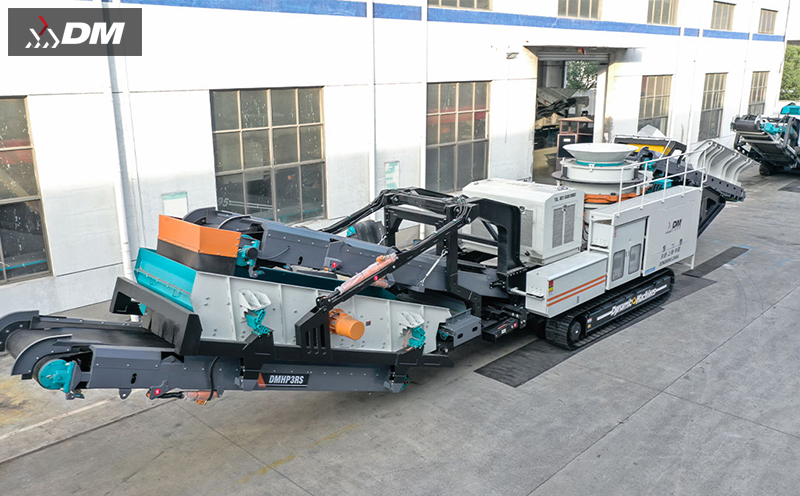
With "intelligent precise sorting + graded crushing and regeneration + environmental closed-loop treatment" as the core, the intelligent sorting and crushing production line solves the core pain points of urban solid waste disposal in New Zealand, achieving a resource utilization rate of over 85%. It not only reduces landfill pollution and protects the ecological environment but also produces high-standard recycled resources, providing a one-stop solution for New Zealand to build a "green circular economy."
I. Core Technology: Intelligent Sorting + Crushing Regeneration, Realizing Full Value Mining of Solid Waste
The intelligent sorting and crushing production line is not a simple "crushing equipment" but an integrated full-chain system integrating "pretreatment - intelligent sorting - graded crushing - shaping - multi-stage screening - resource regeneration." Targeting the characteristics of New Zealand's urban solid waste (high proportion of plastic and metal, good purity of construction waste), it achieves precise separation and efficient conversion:
1. Intelligent Sorting: Millimeter-Level Precise Separation, Maximizing Recyclable Resource Recovery
The front end of the production line is equipped with a "multi-dimensional intelligent sorting system," which achieves efficient classification combined with the characteristics of New Zealand's solid waste composition (high proportion of plastic and metal, good purity of construction waste):
- Pretreatment purification: Adopts a heavy-duty drum screen + manual auxiliary pretreatment to first separate large debris (waste furniture, large building materials) above 500mm in diameter from fine materials of 0-50mm, with a screening efficiency of 90 tons per hour and a pretreatment qualification rate of over 98%, avoiding damage to subsequent equipment by large impurities;
- Intelligent precise identification: Integrates near-infrared optical recognition system, metal sensors, and strong magnetic suction devices to automatically identify and separate PE/PP plastics (recognition accuracy 97%), metals such as iron/aluminum (recovery rate 99%), wood, fabrics and other recyclable resources, with a sorting speed of 1,500 pieces per hour, 400% higher than the efficiency of traditional manual sorting;
- Secondary fine sorting: Sets 2-3 manual sorting stations for secondary purification of special materials not identified by the intelligent system (glass fragments, steel bars in construction waste, tangled plastic), ensuring that the impurity content of crushable materials (bricks, concrete blocks) after sorting is less than 1%, laying the foundation for the quality of recycled aggregates.
2. Graded Crushing + Shaping & Screening: Producing Recycled Resources Meeting New Zealand Standards
For sorted construction waste and inert materials, a refined process of "primary crushing - secondary crushing - tertiary crushing - shaping - multi-stage screening" is adopted to produce recycled products that meet New Zealand's NZS 4404 Aggregate Standard and NZS 3101 Concrete Structures Standard:
- Graded crushing process: The primary crushing module (jaw crusher) processes large materials of ≤500mm with a crushing pass rate of 99%; the secondary crushing module (cone crusher) crushes materials to ≤50mm, with a crushing efficiency 28% higher than that of traditional equipment; the tertiary crushing module (impact crusher) achieves precise particle size control and "shapes" aggregates at the same time, reducing the proportion of needle-like particles (below 10%) and improving compressive strength (above 40MPa), with performance comparable to natural aggregates;
- Multi-stage screening and classification: Through a four-layer high-frequency vibrating screen, one-time crushing can produce four core products —— 16-31.5mm recycled coarse aggregates (for road bases, concrete structures), 8-16mm recycled medium aggregates (for concrete bedding, permeable brick production), 4.75-8mm recycled fine aggregates (for mortar mixing), and 0-4.75mm recycled manufactured sand (for wall plastering, tile adhesive), with a classification efficiency of 98% and a product qualification rate of over 99%;
- Customized output: According to the needs of different projects in New Zealand, screen specifications and crushing parameters can be quickly adjusted to flexibly switch product types without additional replacement of core equipment, adapting to multi-scene needs such as infrastructure, building materials, and decoration.
II. Environmental Closed-Loop: Meeting New Zealand's Extreme Environmental Requirements, Achieving Pollution-Free Production
New Zealand's Resource Management Act sets the world's strictest standards for dust, noise, and wastewater emissions. The intelligent sorting and crushing production line ensures compliant operation through full-process environmental protection design:
- Environmental Production: The factory-style crushing production line adopts fully enclosed corridors and high-efficiency pulse bag filter systems throughout the line, striving to reduce the dust emission concentration by more than 95%; at the same time, through systematic noise reduction design, the overall operating noise is reduced by about 50% compared with traditional equipment, creating a green and harmonious factory environment;
- Vibration control: The equipment base adopts shock absorption design, reducing vibration transmission rate by 80% to avoid affecting buildings around the site;
- Zero wastewater discharge: Sets up a leachate treatment system composed of a sump, sedimentation tank, filter tank, and disinfection tank to collect sewage generated during sorting and crushing. After treatment, it is recycled for equipment cooling, site cleaning, and aggregate humidification, with a water resource recycling rate of 100% and no external discharge;
- Waste minimization: The proportion of non-recyclable inert waste (a small amount of sludge, uncrushable large debris) is only below 5%, which can be compressed and used as landfill cover soil or road subgrade filling, reducing landfill volume by 90% compared with traditional landfilling models and significantly reducing the pressure on landfill space.
III. Efficient Intelligence + Local Adaptation: Addressing New Zealand's Operational Pain Points
Combined with New Zealand's current situation of "high labor costs, strict site approval, and difficult operation and maintenance in remote areas," the production line has been specially optimized:
- Automation reduces costs and manpower: Equipped with a PLC centralized control system, operators can real-time monitor equipment operation status (capacity, load, material flow) through a touch screen and remotely adjust process parameters. Only 3-4 personnel are required to complete the full-process operation of a single production line (including inspection and simple maintenance), saving 70% of labor costs compared with traditional manual models; the system supports remote diagnosis and fault early warning, reducing on-site maintenance frequency and lowering the operation and maintenance difficulty of projects in remote areas;
- High processing capacity and stability: A single production line can handle 800-1,500 tons of urban solid waste per day, and large-scale projects can achieve a daily processing capacity of over 3,000 tons through multi-system parallel connection, which can cover the solid waste disposal needs of medium-sized cities in New Zealand; core equipment is made of wear-resistant alloy materials, extending the service life of vulnerable parts by 40%, with annual shutdown maintenance time not exceeding 5% of the total operating time, and the Overall Equipment Efficiency (OEE) is stably maintained above 90%;
- Strong site adaptability: The production line adopts a modular design, which can be disassembled and transported to narrow sites (such as Auckland urban demolition sites) or remote areas (small towns in the South Island) without complex foundation construction. The on-site assembly and commissioning cycle only takes 3-5 days, shortening the deployment time by 90% compared with traditional production lines, significantly reducing site approval and infrastructure costs;
- Localized service support: Cooperating with local maintenance enterprises in Auckland and Christchurch, New Zealand, core vulnerable parts (crushing jaws, screens, dust filter elements) are reserved to ensure that the spare parts supply cycle is shortened to within 72 hours; bilingual operation training and regular inspection services are provided to ensure that local employees quickly master operating skills.
IV. Practical Case in New Zealand: "Circular Revolution" of Solid Waste Disposal in Christchurch
After a solid waste treatment center in Christchurch introduced the intelligent sorting and crushing production line, it achieved remarkable benefits within only 8 months of operation, becoming a "solid waste resource recycling" demonstration project in New Zealand:
- Resource regeneration benefits: Processes 1,000 tons of solid waste per day, of which 42% of construction waste is converted into recycled aggregates and manufactured sand, supplying Christchurch suburban road upgrade projects and low-carbon affordable housing construction projects monthly with sales of 250,000 New Zealand dollars; recycled metals and plastics are baled and supplied to local recycling enterprises, generating additional annual income of over 1.2 million New Zealand dollars, and the comprehensive yield rate of resource recovery reaches 40%;
- Environmental improvement effects: The land occupation rate of the landfill in northern Christchurch has decreased by 80%, groundwater pollution indicators (heavy metals, COD) in the surrounding area have dropped by 75%, and the compliance rate of soil pollution has increased from 55% to 99%, winning the "Green Circular Demonstration Project" certification from New Zealand's Ministry for the Environment and becoming a benchmark for solid waste disposal in the South Island;
- Cost savings and policy support: After local infrastructure projects use recycled aggregates, raw material procurement costs have decreased by 45%, and the total project cost has dropped by 8%-10%, attracting construction enterprises from Auckland, Wellington and other cities to sign long-term supply agreements; the project has obtained New Zealand government's "circular economy incentive subsidies" (12 New Zealand dollars per ton of solid waste treated), with subsidy income accounting for 20% of the total project income, shortening the investment return period to 3 years, 45% shorter than that of traditional environmental protection projects.
V. Operation Optimization Suggestions: Maximizing Adaptation to the New Zealand Market
To ensure the efficient landing of the production line in New Zealand, combined with local policies and operating environment, the following strategies are recommended:
- In-depth policy docking: Communicate with local environmental protection departments in advance to obtain policy support such as solid waste treatment subsidies and tax exemptions for recycled resource sales (up to 20%); strictly apply for operation permits in accordance with New Zealand's Resource Management Act and Waste Management Act to ensure compliance without risks;
- Raw material adaptation adjustment: Targeting the characteristics of kitchen waste accounting for about 20% of domestic waste in New Zealand, add a kitchen waste pressing, dewatering + biodegradation module to avoid kitchen waste affecting crushing efficiency and aggregate quality, and realize the resource recycling of kitchen waste (conversion into organic fertilizer), increasing the overall solid waste resource utilization rate to over 90%;
- Market linkage expansion: Sign long-term supply agreements with large New Zealand construction enterprises and road construction companies to establish stable sales channels for recycled aggregates, with order coverage maintained above 80%; participate in bids for local low-carbon construction projects, highlighting the environmental advantages of recycled resources to enhance market competitiveness;
- Local talent training: Cooperate with New Zealand vocational and technical colleges to carry out equipment operation and maintenance training, recruiting local employees accounting for over 80%, which not only reduces labor costs (50% lower than foreign employees) but also improves the social recognition of the project.
Conclusion
Against the background of New Zealand's efforts to promote "carbon neutrality" and "circular economy," the intelligent sorting and crushing production line, with "intelligent sorting to improve purity, graded crushing to ensure quality, environmental closed-loop to maintain compliance, and efficient operation to reduce costs" as the core, not only solves the environmental problem of "waste siege" but also opens up a value channel of "waste to wealth," achieving a resource utilization rate of over 85% for urban solid waste.
It not only reduces landfill volume by 90% and environmental pollution by 75%, protecting New Zealand's pure ecology, but also provides high-standard recycled resources with a cost reduction of 45% for infrastructure projects, alleviating the pressure of natural resource shortage. From urban solid waste disposal to resource recycling, from short-term environmental improvement to long-term circular economy system construction, this production line is becoming a core support for New Zealand to achieve the "zero waste" goal, injecting green momentum into the sustainable development of local cities.
If you would like to get help immediately, you can also fill your requirements on the following form, we will contact you on the right time.


Get In Touch